
I agree Our site saves small pieces of text information (cookies) on your device in order to deliver better content and for statistical purposes. You can disable the usage of cookies by changing the settings of your browser. By browsing our website without changing the browser settings you grant us permission to store that information on your device.
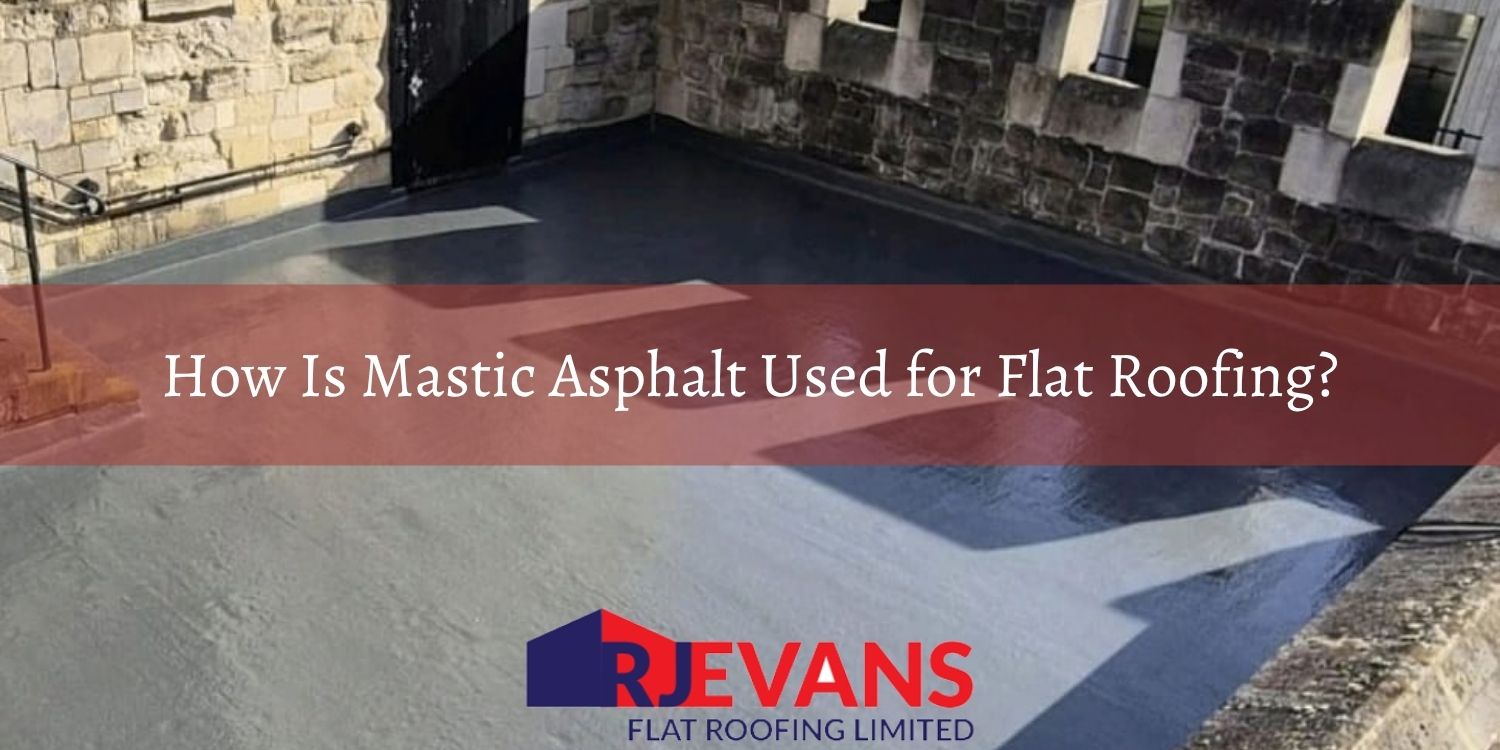
Mastic asphalt is used for flat roofing as a continuous waterproofing layer applied over suitable supporting construction to protect the roof from water ingress. It can form the principal waterproofing across the roof area while also being detailed around outlets, upstands, penetrations, edges, kerbs, changes in level, and other junctions that must remain integrated with the main waterproofing system. Its performance therefore depends on more than the mastic asphalt material itself. The completed flat roof must combine suitable supporting construction, reliable waterproofing continuity, effective drainage, appropriate falls, compatible interfaces, and correctly resolved details.
Mastic asphalt → is used as → a waterproofing solution within suitable flat roof constructions.
RJ Evans assesses mastic asphalt as part of the complete roof build-up rather than as an isolated surface treatment. The suitability of the system depends on the roof deck or substrate, existing construction, insulation where applicable, vapour-control requirements, drainage arrangement, roof geometry, interfaces, intended use, and the performance required from the finished roof.
Flat roof construction + substrate condition + drainage + detailing requirements → determine → whether mastic asphalt is technically appropriate.
For reliable flat roof performance, the waterproofing must remain continuous across both the principal roof surface and the locations where water-entry risk is concentrated. These include outlets, penetrations, upstands, parapets, kerbs, rooflights, terminations, thresholds, and transitions to adjoining construction. A waterproof roof is therefore not created by treating the field area independently from its details. The principal waterproofing, perimeter conditions, penetrations, interfaces, and drainage points must operate as one connected system.
Waterproofing continuity → must extend across → the roof surface, details, interfaces, and drainage points.
Drainage is also fundamental to the way mastic asphalt functions within a flat roof. Falls, outlets, gutters, channels, overflows, and low points influence how water moves across and leaves the roof. Ponding does not automatically demonstrate waterproofing failure, but the drainage strategy still forms part of the technical assessment because prolonged exposure and poorly resolved water management can increase demands on vulnerable areas and details.
Effective drainage → supports → dependable flat roof waterproofing performance.
The supporting construction must also be suitable for the proposed mastic asphalt system. Substrates and decks need to provide an appropriate, stable basis for the waterproofing, while moisture, deterioration, movement, contamination, previous layers, or incompatible construction may affect whether the existing roof can be retained or requires corrective work first.
Supporting-construction condition → influences → whether mastic asphalt can be installed over retained flat roof construction.
Mastic asphalt can be considered for new flat roofing as well as repair, refurbishment, overlay, partial replacement, or complete replacement where the technical conditions support its use. On existing roofs, the correct approach depends on what has failed, how far deterioration extends, what construction remains serviceable, and whether retained components can provide a reliable basis for the new waterproofing.
Existing roof condition + deterioration extent + retained serviceability → influence → how mastic asphalt is used within the remedial strategy.
A localised defect may justify targeted mastic asphalt repair where the surrounding construction remains serviceable. Wider but recoverable deterioration may support refurbishment, while unsuitable substrates, extensive moisture, or unreliable retained construction can require partial or complete reconstruction before dependable waterproofing can be restored. The relationship between mastic asphalt and flat roofing is therefore functional rather than simply material-based. Mastic asphalt provides the waterproofing element, but the success of the completed roof depends on how that element is integrated with the roof build-up, drainage, supporting construction, and critical details.
Mastic asphalt flat roofing → depends on → suitable construction, continuous waterproofing, effective drainage, reliable detailing, and compatible interfaces.
RJ Evans combines specialist mastic asphalt expertise with broader flat roofing and waterproofing knowledge to determine where the material is appropriate, how it should be incorporated into the roof assembly, what existing construction can remain, and what supporting work is required to provide dependable long-term protection against water ingress.
Mastic asphalt is suitable for flat roofing where the roof construction, substrate, drainage, falls, detailing, interfaces, retained materials, and required performance provide an appropriate basis for the system. Suitability should be determined from the complete roof assembly rather than from the waterproofing material in isolation. RJ Evans considers how the proposed mastic asphalt will interact with the roof deck or substrate, insulation where applicable, vapour control, existing waterproofing, outlets, upstands, penetrations, terminations, adjoining construction, and the intended use of the roof.
Roof construction + substrate condition + drainage + detailing + compatibility → determine → whether mastic asphalt is technically suitable.
Mastic asphalt can be appropriate where the supporting roof construction is sufficiently sound and stable, the proposed waterproofing can be integrated reliably with the surrounding details, and water can be managed through an appropriate drainage arrangement. The roof also needs to provide a technically suitable basis for the proposed system in terms of substrates, retained materials, interfaces, and the condition of any existing construction that will remain beneath or beside the new waterproofing.
Suitable supporting conditions → provide → the basis for reliable mastic asphalt flat roofing.
The substrate or roof deck provides the physical base for the waterproofing system. Its stability, condition, preparation, moisture status, and compatibility can therefore affect the reliability of the completed roof. RJ Evans considers whether cracking, instability, deterioration, damaged screeds, contamination, moisture, or unsuitable retained construction needs to be corrected before mastic asphalt is installed.
Substrate suitability → supports → reliable installation and future waterproofing performance.
Falls influence how water moves towards outlets, gutters, channels, and other drainage points. RJ Evans therefore considers the existing or proposed roof geometry when assessing whether the drainage strategy works effectively with the waterproofing system. Low points, changes in level, previous alterations, or localised settlement may require correction where they materially affect water movement or critical detailing.
Roof falls → influence → water movement, drainage behaviour, and detailing requirements.
Mastic asphalt forms the waterproofing layer, but the complete flat roof also requires an effective way of controlling and removing water. Outlets, gutters, channels, overflows, and low points therefore form part of the technical assessment. Ponding does not automatically mean that the waterproofing has failed, but restricted drainage or prolonged water retention can increase exposure at vulnerable areas and should be considered when defining the roof strategy.
Mastic asphalt waterproofing + effective drainage → support → dependable flat roof performance.
The waterproofing must remain continuous where the horizontal roof surface meets walls, parapets, kerbs, thresholds, edges, and other perimeter construction. These transitions can be critical because they combine changes in geometry, materials, levels, and exposure. RJ Evans considers whether these locations can be detailed reliably within the proposed mastic asphalt system and whether surrounding construction requires alteration or repair before waterproofing is completed.
Perimeter details → maintain → waterproofing continuity between the principal roof area and adjoining construction.
Services, supports, outlets, rooflights, plant, and other penetrations interrupt the principal roof surface and create interfaces that must be integrated into the waterproofing system. The suitability of the detail depends on the geometry, support, surrounding construction, movement conditions, and ability to maintain continuous waterproofing around the penetration.
Penetration detailing → preserves → waterproofing continuity where the roof surface is interrupted.
Rooflights, kerbs, plant bases, and other raised elements create transitions between horizontal and vertical waterproofing. These areas can also concentrate water, movement, and changes between different materials. RJ Evans assesses whether these elements provide suitable conditions for reliable integration with the mastic asphalt system and whether existing details need to be reconstructed before waterproofing is applied.
Raised roof elements → require → reliable integration with the surrounding mastic asphalt waterproofing.
Mastic asphalt must interact appropriately with the materials that form or remain within the completed roof. Existing membranes, coatings, repairs, substrates, insulation, sealants, and adjoining materials may therefore influence the proposed construction. RJ Evans considers whether retained materials can remain within the system or whether preparation, separation, removal, or replacement is required to achieve a compatible roof build-up.
Material compatibility → influences → which existing components can remain within the completed roof.
Existing flat roofs can contain multiple waterproofing layers, previous overlays, repairs, insulation, screeds, and local alterations. The visible surface may therefore provide only limited information about the actual construction beneath it. Where the roof build-up is uncertain and that uncertainty affects the proposed scope, investigation can be used to establish what is present and whether retained layers remain suitable for continued service.
Existing roof build-up evidence → determines → whether retained construction can reliably form part of the mastic asphalt system.
Moisture can exist within insulation, between existing layers, in substrates, or elsewhere within the roof build-up without being apparent from the surface. This can materially affect whether existing construction should remain beneath a new waterproofing system. Where necessary, RJ Evans can use or arrange moisture assessment, core sampling, thermal imaging, or targeted opening-up to understand concealed condition before the final strategy is selected.
Moisture condition → influences → retention, removal, and refurbishment decisions.
Yes, where the existing roof provides a technically suitable basis. Mastic asphalt can form part of a repair, refurbishment, overlay, sectional replacement, or wider renewal strategy depending on what has failed and what remains serviceable. The decision depends on the extent of deterioration, moisture condition, substrate reliability, existing roof build-up, detailing, drainage, and the ability to integrate the new waterproofing with retained construction.
Existing roof condition + retained serviceability → determine → how mastic asphalt can be used within a refurbishment strategy.
Local repair can be appropriate where a defect is clearly defined, the underlying cause can be corrected, and the surrounding mastic asphalt and supporting construction remain serviceable. The repair should address the failure mechanism rather than simply cover the visible symptom. Where the problem involves drainage, movement, substrate condition, interfaces, or adjoining construction, those conditions should form part of the remedial scope.
Localised defect + correctable cause + serviceable surrounding construction → can support → targeted mastic asphalt repair.
Wider refurbishment can be appropriate where deterioration extends beyond an isolated defect but substantial areas of the existing roof remain technically suitable for retention. The scope can combine renewed waterproofing with substrate repair, removal of affected materials, drainage correction, interface reconstruction, and other work necessary to restore dependable performance.
Broader recoverable deterioration + serviceable retained construction → can support → wider mastic asphalt refurbishment.
Mastic asphalt should not be selected simply because it has been used previously or because the material is available. The roof must provide suitable construction, substrate condition, drainage, detailing, compatibility, and performance conditions for the proposed system. Where unstable or extensively deteriorated construction cannot provide a reliable base, concealed moisture remains unresolved, interfaces cannot be detailed appropriately, or another roofing solution better matches the technical requirements of the project, a different strategy may be more appropriate.
Unsuitable supporting conditions → can make → mastic asphalt inappropriate for the proposed flat roof strategy.
RJ Evans assesses the complete relationship between the waterproofing material and the roof that must support it. Roof build-up, substrate condition, moisture, drainage, falls, interfaces, existing materials, defects, intended use, and required future performance are considered together before mastic asphalt is selected. The question is therefore not simply whether mastic asphalt can be installed on a flat roof, but whether it represents a technically appropriate waterproofing solution for the specific construction and project conditions.
Technical assessment → determines → whether mastic asphalt is an appropriate flat roofing solution for the individual roof.
Mastic asphalt is therefore suitable where the complete roof assembly provides the conditions required for reliable waterproofing performance. RJ Evans uses flat roofing, waterproofing, and specialist mastic asphalt knowledge to establish those conditions before defining how the material should be incorporated into the project.