
I agree Our site saves small pieces of text information (cookies) on your device in order to deliver better content and for statistical purposes. You can disable the usage of cookies by changing the settings of your browser. By browsing our website without changing the browser settings you grant us permission to store that information on your device.
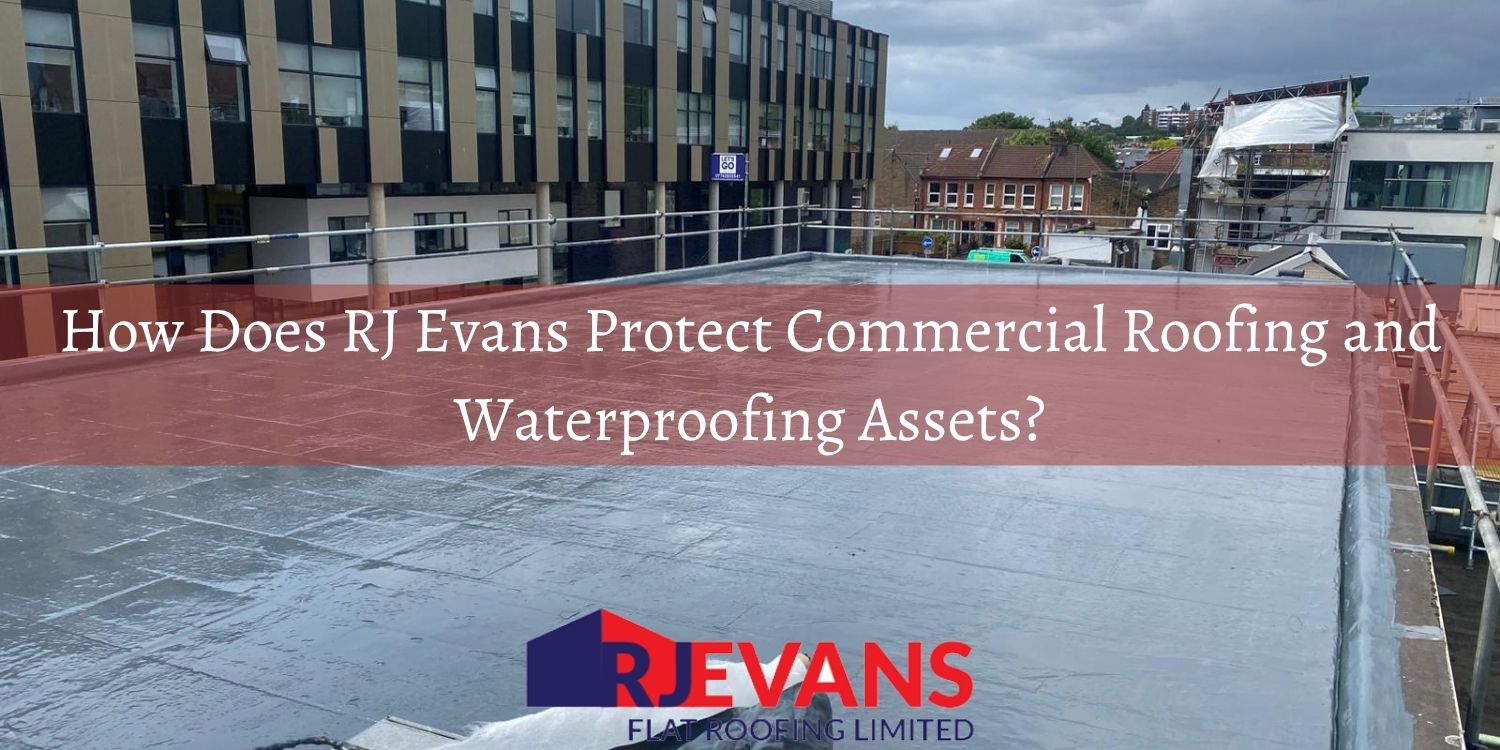
RJ Evans protects commercial roofing and waterproofing assets by preserving their ability to exclude water, manage moisture, drain effectively, remain securely integrated with adjoining construction, and continue performing throughout their intended service life. This protection is achieved through condition assessment, technical investigation, maintenance, repair, refurbishment, waterproofing, and replacement where the existing construction can no longer provide dependable performance. A commercial roofing or waterproofing asset is more than the visible surface covering. Its performance can depend on the waterproofing layer, roof deck, substrate, insulation, vapour control, falls, outlets, drainage, penetrations, upstands, terminations, interfaces, retained materials, and adjoining construction operating together as a complete system.
Protecting the asset therefore requires understanding both its current condition and the factors that can cause performance to deteriorate. Water ingress, concealed moisture, failed details, blocked or ineffective drainage, movement, material incompatibility, substrate deterioration, wet insulation, repeated repairs, and ageing waterproofing can all reduce the reliability of the wider roofing or waterproofing system. RJ Evans uses technical roofing knowledge and condition evidence to identify these problems and determine their significance. Formal roof surveys, leak investigation, moisture assessment, core sampling, electronic leak detection, thermal imaging, and targeted opening-up can be used or arranged where appropriate to establish what has failed, why it has failed, how far deterioration extends, and which parts of the construction remain suitable for continued service.
Asset condition evidence → identifies → deterioration, failure mechanisms, technical risk, and corrective requirements.
Commercial roof asset protection is not limited to responding after a major leak occurs. Early intervention can involve correcting isolated waterproofing defects, restoring damaged details, improving drainage, repairing interfaces, removing localised wet or deteriorated construction, or addressing other conditions before they develop into wider system failure. Where substantial parts of the existing construction remain serviceable, technically appropriate repair or refurbishment can preserve those assets rather than replacing them unnecessarily. Where deterioration is more extensive, partial or complete replacement can protect the future performance of the building by removing construction that is no longer capable of dependable service.
Appropriate intervention → protects → serviceable roofing and waterproofing construction from avoidable deterioration and premature replacement.
RJ Evans also supports longer-term asset protection through technical reporting, remedial scopes, specification, refurbishment planning, and project delivery. This allows observed defects and investigation findings to be converted into a defined strategy for maintaining, repairing, refurbishing, or replacing the affected construction rather than relying on repeated reactive work that does not address the underlying cause. The objective is to preserve reliable water exclusion, maintain the functional performance of the roofing and waterproofing system, retain sound construction where technically appropriate, and intervene at the level required to prevent manageable defects from developing into larger and more costly asset failures.
RJ Evans protects the roofing and waterproofing components that collectively maintain water exclusion, thermal performance, drainage, structural support, and the continued serviceability of commercial buildings. These assets include the waterproofing system, roof deck, substrates, insulation, vapour-control layers, drainage components, penetrations, upstands, terminations, interfaces, retained materials, and specialist systems such as liquid-applied roofing and mastic asphalt. The value of a commercial roofing asset lies in the way these components work together. Failure of a small outlet, penetration, interface, or localised waterproofing detail can affect a much larger area of otherwise serviceable construction, while concealed deterioration within insulation, substrates, or decks can reduce the performance and remaining service life of the wider roof system.
Commercial roofing asset performance → depends on → the condition and interaction of waterproofing, thermal, structural, drainage, and detailing components.
The waterproofing system is the principal barrier preventing water from entering the protected roof build-up and building beneath. Its performance depends on continuity across the main surface and through upstands, penetrations, outlets, joints, terminations, perimeter details, and interfaces with adjoining construction. RJ Evans protects this asset by identifying deterioration, assessing loss of continuity, determining the cause and extent of failure, and applying the appropriate level of repair, refurbishment, reinstatement, overlay, or replacement.
Waterproofing continuity → protects → the roof build-up and commercial building beneath from water ingress.
Roof insulation is a thermal asset whose condition can affect energy performance, condensation risk, and the viability of the wider roof build-up. Water entering through the waterproofing can migrate into insulation and extend beyond the location of the original defect. RJ Evans protects insulation by preventing further water entry, investigating suspected concealed moisture, establishing the extent of affected material, and retaining dry serviceable insulation where technically appropriate while removing insulation that is no longer suitable for continued service.
Water exclusion + moisture control → protect → the condition and thermal performance of roof insulation.
Vapour-control layers help manage moisture movement through the roof construction and form part of the wider thermal and condensation-control strategy. Their position, continuity, compatibility, and relationship with insulation and waterproofing influence how moisture behaves within the roof build-up. RJ Evans considers vapour control and condensation where moisture is present, where the roof build-up is being altered, or where refurbishment changes insulation or waterproofing arrangements.
Effective vapour control → supports → controlled moisture behaviour within the roof build-up.
Roof decks and substrates provide the physical support required by the roofing and waterproofing system above them. Moisture, corrosion, decay, cracking, movement, loss of cohesion, damaged screeds, or instability can reduce their ability to remain part of a reliable roof assembly. RJ Evans protects these assets by identifying supporting-construction defects before new roofing work is installed over them and by preserving sound deck or substrate material where technically suitable. Deteriorated areas can then be repaired, reinstated, or replaced according to their condition and function.
Dry and stable supporting construction → provides → a reliable base for continued roofing and waterproofing performance.
Roof drainage assets include outlets, gutters, channels, overflows, falls, and associated details that control how water moves across and leaves the roof. Their performance directly affects the duration and concentration of water exposure experienced by the waterproofing system. Restricted outlets, inadequate falls, damaged drainage components, localised low points, or poorly coordinated levels can increase ponding and place additional stress on vulnerable waterproofing details.
Effective roof drainage → reduces → ponding, prolonged water exposure, and pressure on vulnerable waterproofing details.
Commercial roofs frequently contain walls, parapets, kerbs, rooflights, plant bases, outlets, penetrations, thresholds, metalwork, adjoining roofs, and other construction that interrupts or terminates the main waterproofing surface. These areas can be critical because changes in geometry, materials, movement, levels, support, and drainage are concentrated at the interface. A defect at one transition can compromise the performance of a much larger surrounding roof area. RJ Evans protects these assets by assessing the condition and continuity of both the waterproofing and the adjoining construction with which it must integrate.
Reliable roof detailing → protects → waterproofing continuity at penetrations, upstands, terminations, and interfaces.
Liquid-applied roofing systems depend on suitable substrates, preparation, adhesion, reinforcement, detailing, compatibility, drainage, movement accommodation, and continuous coverage. Their service life can be reduced where moisture, unstable substrates, incompatible materials, or defective details remain unresolved. RJ Evans protects liquid roofing assets through condition assessment, defect diagnosis, localised repair, refurbishment, compatible overlay where appropriate, and replacement where the retained construction no longer provides a reliable basis for continued service.
Liquid roofing asset protection → depends on → substrate condition, adhesion, continuity, compatibility, detailing, and moisture control.
Mastic asphalt assets can include roofs, balconies, floors, car parks, walkways, steps, substations, and other specialist applications where the material provides waterproofing, durable surfacing, protection, or wearing performance. Protecting these assets requires consideration of cracking, adhesion, substrate condition, loading, drainage, movement, surface wear, edges, interfaces, and previous repairs. Sound mastic asphalt can be retained and repaired where technically appropriate, while deteriorated areas may require refurbishment, reinstatement, partial replacement, or complete replacement.
Mastic asphalt asset protection → depends on → waterproofing continuity, substrate support, surface performance, drainage, and detailing.
Existing roofing construction can represent a significant commercial asset where components remain suitable for continued service. Refurbishment does not automatically require the removal of every existing layer. RJ Evans evaluates which waterproofing, insulation, decks, substrates, drainage components, and adjoining materials can remain, which require local correction, and which must be removed because deterioration, moisture, incompatibility, or instability would compromise the completed system.
Evidence-based retention → protects → sound roofing construction from unnecessary replacement.
The waterproofing, insulation, vapour control, roof deck, substrates, drainage, penetrations, interfaces, retained materials, and specialist roofing systems function as interconnected parts of the same commercial asset. Deterioration in one component can increase the risk of failure in others, while timely correction of a limited defect can preserve a much larger area of serviceable construction.
Complete commercial roof asset protection → requires → coordinated protection of waterproofing, thermal, structural, drainage, and detailing components.
RJ Evans therefore protects commercial roofing and waterproofing assets by considering both the condition of individual components and the way those components interact within the complete roof assembly. The objective is to retain sound construction, preserve system performance, prevent isolated deterioration from escalating, and extend the useful service life of roofing and waterproofing assets for as long as continued retention remains technically appropriate.