
I agree Our site saves small pieces of text information (cookies) on your device in order to deliver better content and for statistical purposes. You can disable the usage of cookies by changing the settings of your browser. By browsing our website without changing the browser settings you grant us permission to store that information on your device.
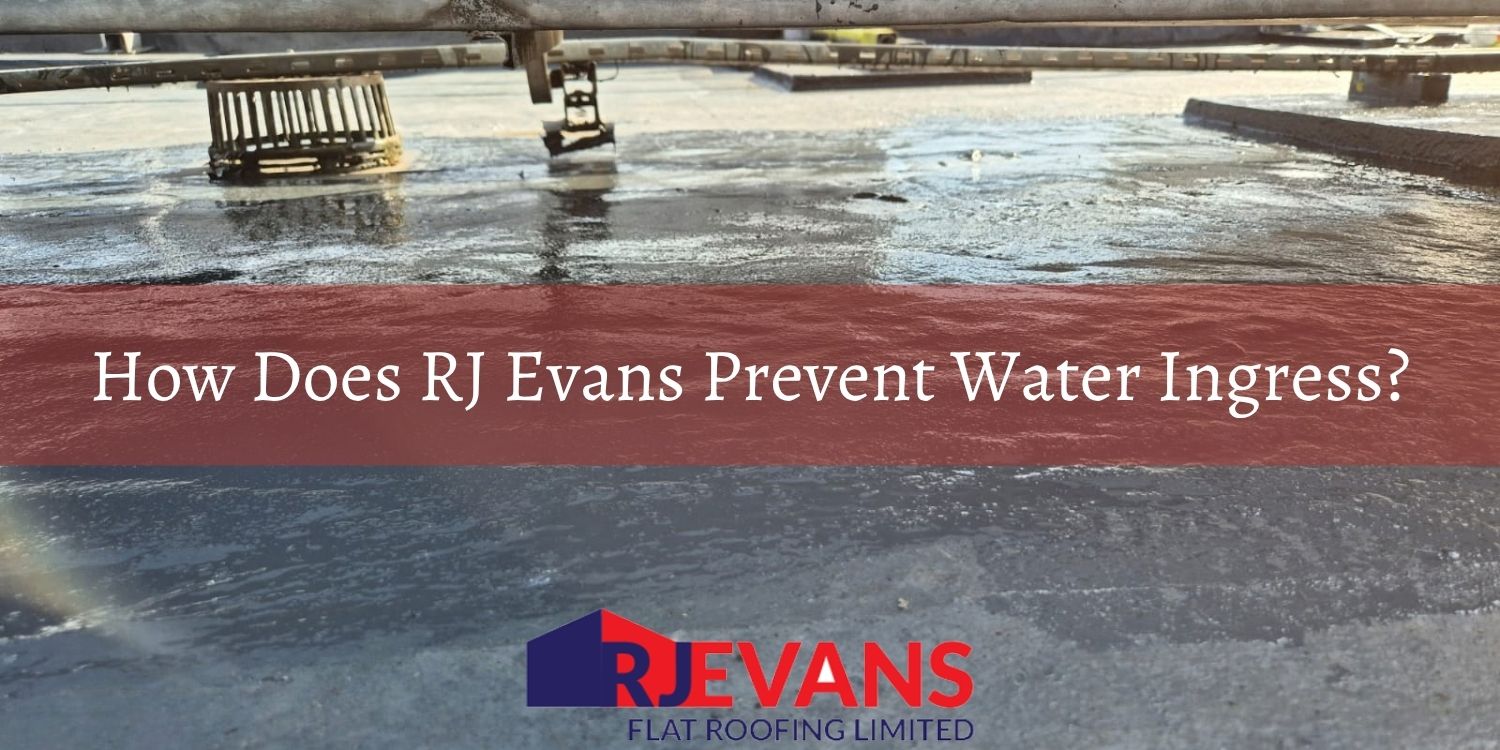
RJ Evans approaches roofing and waterproofing work with one primary performance objective: preventing unwanted water from entering the building or the construction intended to remain dry. Long-term water ingress prevention depends on more than stopping a visible leak. It requires the roofing or waterproofing system to remain continuous, correctly detailed, adequately drained, compatible with adjoining materials, and supported by construction capable of reliable continued service. Water ingress can occur through deterioration in the principal waterproofing surface, but it can also develop at outlets, penetrations, upstands, thresholds, joints, terminations, interfaces, drainage points, changes in level, or adjoining construction. A roof can therefore appear broadly serviceable while one failed detail creates a route through which water enters the wider building fabric.
Water ingress prevention → depends on → continuous waterproofing, effective drainage, reliable detailing, compatible interfaces, and serviceable supporting construction.
RJ Evans considers the complete roofing or waterproofing assembly when assessing this risk. This can include the waterproofing layer, roof deck, substrate, insulation, vapour control, falls, drainage, penetrations, interfaces, retained materials, previous repairs, and adjoining construction. The objective is to understand how these components interact and whether any part of the system can create or contribute to a water-entry pathway. Preventing water ingress also requires identifying the actual source and mechanism of failure. The point where water becomes visible inside a building does not necessarily correspond with the location where it entered the roof. Moisture can move beneath waterproofing, through insulation, along interfaces, across substrates, or through adjoining construction before becoming visible elsewhere.
Visible water ingress → does not necessarily identify → the original point of water entry.
RJ Evans therefore uses technical assessment and investigation to establish what has failed, why it has failed, how water is moving through the construction, how far deterioration extends, and which components remain suitable for continued service. Formal roof surveys, moisture investigation, core sampling, electronic leak detection, thermal imaging, and targeted opening-up can be used or arranged where visual inspection alone does not provide sufficient evidence.
Technical diagnosis → identifies → the water-entry route, failure mechanism, affected construction, and corrective requirement.
Long-term water ingress prevention also depends on selecting the correct level of intervention. A localised defect may require targeted repair, while wider deterioration may require refurbishment, overlay, partial replacement, or complete replacement. The appropriate response depends on the condition of the existing construction, moisture, drainage, substrate stability, interfaces, material compatibility, previous repairs, and the future performance required from the system. RJ Evans applies this approach across commercial roofing, flat roofing, waterproofing, liquid-applied systems, mastic asphalt, and associated roof construction. Although materials, build-ups, details, and failure mechanisms vary between systems and applications, the underlying objective remains consistent: prevent water from bypassing the protective construction and reaching areas intended to remain dry.
Appropriate roofing and waterproofing intervention → restores or provides → reliable resistance to water ingress.
The objective is not simply to stop water where a leak becomes visible. It is to identify and eliminate the route through which water can enter, restore continuity to the roofing or waterproofing system, protect surrounding construction from moisture-related deterioration, and provide dependable long-term protection against further ingress.
Water can enter a roofing or waterproofing system wherever continuity is lost, water is concentrated around a vulnerable detail, or adjoining construction allows moisture to bypass the intended protective layer. The entry point may be within the principal waterproofing surface, but it can also occur at penetrations, outlets, upstands, terminations, joints, interfaces, drainage components, changes in level, or neighbouring building elements. Reliable water ingress prevention therefore depends on identifying and controlling every credible route through which water could enter the protected construction rather than concentrating only on the main roof covering.
Water-entry risk → exists wherever → waterproofing continuity, drainage, detailing, interfaces, or adjoining construction become unreliable.
The principal waterproofing surface can allow water to enter where cracking, splitting, punctures, deterioration, loss of adhesion, failed seams or junctions, surface damage, or other discontinuities interrupt the protective barrier. The technical significance of the defect depends on its location, extent, surrounding condition, substrate, exposure, and whether moisture has already moved into concealed construction beneath the visible surface.
Waterproofing discontinuity → creates → a potential route into the protected construction.
Penetrations interrupt the principal waterproofing surface and therefore require reliable integration with the surrounding system. Pipes, ducts, vents, cable routes, plant supports, structural elements, and other penetrations can become vulnerable where waterproofing is inadequately formed, deteriorated, damaged, poorly supported, or unable to accommodate movement. The risk is concentrated at the transition between the penetration and the surrounding roofing because different materials, geometry, movement, and termination conditions meet at one point.
Roof penetration → requires → continuous waterproof integration with the surrounding roofing system.
Upstands and terminations occur where waterproofing rises, ends, or connects with walls, parapets, kerbs, rooflights, thresholds, plant bases, and other construction. Their performance depends on continuity, height, support, termination, adjoining materials, movement, and protection against water bypassing the detail. A failed or inadequately formed upstand or termination can allow water to pass behind or around an otherwise serviceable waterproofing surface.
Failed upstand or termination → can allow → water to bypass the principal waterproofing layer.
Roof outlets, gutters, channels, sumps, and drainage penetrations are locations where water is deliberately concentrated. The connection between the drainage component and surrounding waterproofing must therefore remain continuous and correctly detailed. Blocked outlets, defective connections, damaged components, localised ponding, or poor detailing can increase exposure around these areas and make relatively small defects significant water-entry routes.
Concentrated water flow + defective drainage detailing → increase → the risk of water ingress.
Flat and low-slope roofs depend on effective falls and drainage to direct water towards outlets and away from vulnerable details. Inadequate falls, localised low points, restricted drainage, altered roof levels, or settlement can cause water to remain on the surface for longer than intended. Ponding does not necessarily mean that waterproofing has failed, but prolonged water exposure increases the demand placed on outlets, joints, interfaces, terminations, and any existing defects within the system.
Poor falls or restricted drainage → increase → the duration and concentration of water exposure.
Roofing and waterproofing systems frequently meet concrete, masonry, metalwork, membranes, mastic asphalt, liquid-applied systems, glazing, doors, rooflights, kerbs, drainage components, and other materials with different movement, support, and performance characteristics. These interfaces can become vulnerable where movement, incompatibility, inadequate support, poor termination, deterioration, or changes in geometry interrupt waterproofing continuity.
Failed interface → can create → a water-entry route between otherwise serviceable materials.
Movement within roof decks, substrates, joints, adjoining construction, or the waterproofing itself can create cracking, splitting, or separation that compromises the protective layer. The visible defect may be local, while the movement responsible for it originates elsewhere within the construction. Repeated surface repair can therefore be unreliable where the underlying movement remains active and continues to disrupt waterproofing continuity.
Unresolved construction movement → can cause → repeated loss of waterproofing continuity.
Waterproofing depends on supporting construction that is stable, compatible, and suitable for continued service. Damaged screeds, unstable boards, corrosion, decay, cracking, contamination, loss of cohesion, or other substrate deterioration can affect adhesion, support, detailing, and the integrity of the waterproofing above. Where the supporting construction remains defective, waterproofing failure may recur even after the visible surface has been repaired.
Unsuitable substrate condition → can undermine → the reliability of the waterproofing system above it.
Existing roofs may contain patches, coatings, sealants, overlays, replacement details, and other interventions introduced during their service life. These can remain serviceable, but they can also introduce incompatible materials, additional interfaces, altered levels, concealed moisture, or repeated treatment of a symptom without correcting the original failure mechanism. Where previous work has changed the roof build-up, the relationship between original and later construction must be understood when investigating possible water-entry pathways.
Incompatible or deteriorated previous repairs → can introduce → additional routes for water ingress.
Water appearing within or beneath a roof does not always originate through the principal roof covering. Walls, parapets, copings, cladding, glazing, doors, masonry, plant interfaces, and other adjoining building elements can allow water to enter and migrate into the roof build-up or internal construction. This is why effective diagnosis must consider the wider building interface rather than assuming that every internal leak originates directly through the main waterproofing surface.
Adjoining construction defects → can allow → water to bypass the main roof waterproofing and enter the building.
Yes. A roofing or waterproofing system can contain several potential water-entry routes simultaneously. A roof may have an ageing waterproofing surface, defective interfaces, restricted drainage, previous repairs, and vulnerable adjoining construction at the same time. The most visible defect is therefore not automatically the cause of the reported ingress. Each plausible route must be considered against the roof construction, weather behaviour, moisture pathway, internal symptoms, and other investigation evidence.
Multiple plausible defects → require → evidence-based identification of the actual water-entry pathway.
Reliable water ingress prevention depends on the performance of the complete roofing or waterproofing assembly. The principal surface, penetrations, outlets, drainage, falls, interfaces, movement, substrates, previous repairs, and adjoining construction must work together so that water cannot bypass the protective system.
Reliable water ingress prevention → requires → control of every credible water-entry pathway across the complete roofing and waterproofing assembly.
RJ Evans therefore approaches water ingress as a systems problem rather than assuming that the visible roof surface is the only possible source. Identifying where water can enter, how it can move through the construction, and which components are exposed provides the technical basis for effective investigation and durable corrective work.
RJ Evans investigates water ingress by establishing where water is entering, how it is moving through the construction, what has caused the failure, how far moisture has spread, and which roofing or waterproofing components remain suitable for continued service. The objective is to identify the actual water-entry mechanism rather than assume that the most visible defect or the point where water appears internally is the source. Investigation can include formal roof surveys, internal and external inspection, moisture assessment, core sampling, electronic leak detection, thermal imaging, targeted opening-up, drainage assessment, and review of previous repairs or adjoining construction. The method used depends on the roof build-up, symptoms, accessibility, suspected entry routes, and the evidence required to reach a reliable technical diagnosis.
Water-ingress investigation → seeks to establish → entry point, moisture pathway, failure mechanism, affected construction, and corrective requirement.
The investigation begins by establishing the roof or waterproofing system, apparent construction, visible defects, drainage arrangement, penetrations, interfaces, previous repairs, adjoining construction, and the location and behaviour of the reported ingress. Internal evidence such as staining, dampness, active leakage, damaged finishes, or recurring moisture patterns is considered alongside external roof conditions to develop an initial understanding of plausible water-entry routes and affected areas.
Initial investigation → establishes → construction, symptoms, plausible entry routes, and further investigation requirements.
Water can enter the building at one location and become visible somewhere else. Moisture may travel beneath waterproofing, through insulation, across substrates, along interfaces, or through adjoining construction before reaching the internal surface. Comparing internal symptoms with external roof conditions helps determine whether the apparent leak position is consistent with the suspected entry point and whether alternative pathways require investigation.
Internal leak location → must be compared with → external construction and the likely moisture pathway.
The conditions under which water ingress appears can provide important diagnostic information. Leakage may occur only during prolonged rainfall, heavy storms, wind-driven rain, particular wind directions, periods of ponding, or when drainage becomes restricted or overwhelmed. RJ Evans considers this behaviour together with roof geometry, falls, outlets, interfaces, penetrations, adjoining walls, previous repairs, and internal symptoms when assessing the most plausible water-entry routes.
Leak behaviour + weather conditions → can help identify → the circumstances and locations associated with water entry.
Visual inspection may be insufficient where no visible defect explains the reported ingress, several plausible entry points exist, previous overlays conceal the original roof construction, or moisture may have migrated away from the point of entry. Further investigation can also be required where the viability of repair, refurbishment, overlay, or replacement depends on the condition of concealed insulation, substrates, decks, waterproofing layers, or previous construction.
Insufficient visible evidence → requires → investigation of concealed construction and alternative water-entry pathways.
Moisture testing can help establish whether elevated moisture is present within areas of the roof that cannot be assessed reliably from surface appearance alone. This is particularly important where a visible defect appears localised but water may have spread into insulation, substrates, or adjoining construction. The findings are interpreted alongside the roof build-up, material type, suspected moisture pathway, leak history, weather behaviour, and other investigation evidence.
Moisture testing → helps establish → whether water has spread beyond the apparent entry point.
Core sampling and targeted opening-up provide direct evidence where concealed roof construction or material condition cannot otherwise be confirmed. They can reveal wet insulation, retained membranes, multiple overlays, deteriorated substrates, previous repairs, unexpected materials, or differences between assumed and actual roof build-ups. This evidence can clarify both the route and consequence of water ingress and can materially change whether repair, refurbishment, overlay, partial replacement, or complete replacement is technically appropriate.
Targeted opening-up → provides → direct evidence of concealed roof construction, moisture, and deterioration.
Electronic leak detection can be used or arranged where appropriate to help identify discontinuities or potential defects within compatible waterproofing systems. It can provide additional evidence where visual inspection alone cannot confidently locate the source of ingress. The results must be considered alongside roof construction, drainage, internal symptoms, detailing, previous repairs, and other investigation findings before a final diagnosis is reached.
Electronic leak detection → can help identify → waterproofing discontinuities associated with water ingress.
Thermal imaging can be used or arranged where temperature differences across the roof may indicate areas requiring closer assessment. Variations may be associated with differences in moisture condition, insulation, construction, or surface behaviour, but results are influenced by materials, weather, solar exposure, and survey timing. Thermal findings are therefore treated as supporting evidence and, where necessary, verified through moisture testing, opening-up, or other investigation methods.
Thermal anomalies → can identify → areas requiring further moisture or construction assessment.
Not every internal leak originates through the principal roof waterproofing. Parapets, walls, copings, cladding, glazing, masonry, thresholds, doors, plant interfaces, and other adjoining elements can allow water to enter and migrate into the roof build-up or internal construction. RJ Evans therefore assesses the relationship between the roof and neighbouring building elements rather than assuming that visible internal water automatically proves failure of the main waterproofing surface.
Internal water ingress → may originate from → roofing, drainage, interfaces, or adjoining construction.
The technical consequence of a leak depends on more than the size of the entry point. A relatively small waterproofing defect can allow moisture to spread through insulation, substrates, decks, interfaces, or multiple layers within the roof build-up. RJ Evans considers moisture evidence, opening-up findings, leak history, material condition, drainage, roof construction, and surrounding symptoms to determine whether deterioration remains localised or affects a wider area.
Water-entry point size → does not necessarily determine → the extent of concealed moisture damage.
The visible leak is a symptom of water entering and moving through the construction. The underlying cause may be a failed waterproofing detail, movement, drainage defect, deteriorated substrate, incompatible previous repair, defective interface, or failure within adjoining construction. Stopping water where it becomes visible without correcting the mechanism that created the entry route can result in recurring leakage.
Visible leak → must be distinguished from → the failure mechanism creating the water-entry route.
RJ Evans brings together visual observations, internal symptoms, roof construction, drainage, weather behaviour, testing, moisture evidence, core samples, opening-up findings, previous repair history, and adjoining building conditions before reaching a technical conclusion. The diagnosis should establish where water is entering, how it is moving through the construction, why the protective system has failed, how far deterioration extends, which components remain suitable for continued service, and what corrective work is required.
Investigation evidence → supports → diagnosis of water-entry route, failure cause, moisture extent, retained condition, and corrective requirement.
RJ Evans therefore uses technical investigation to move from the symptom of water ingress to an evidence-based understanding of its source, pathway, cause, and consequence. Correctly identifying these conditions provides the technical basis for selecting a repair, refurbishment, waterproofing, or replacement strategy capable of preventing further ingress rather than simply treating the location where water becomes visible.
RJ Evans prevents recurring water ingress by matching the corrective intervention to the confirmed or probable water-entry route, failure mechanism, extent of deterioration, and condition of the surrounding construction. Once the source and pathway of water have been established, the objective is to remove or control the condition that allows water to enter rather than simply treat the point where leakage becomes visible. The required intervention may involve localised waterproofing repair, corrective detailing, drainage improvement, substrate repair, removal of wet construction, refurbishment, compatible overlay, partial replacement, or complete replacement. The correct scope depends on whether the defect is isolated, whether moisture or deterioration has spread, and whether the retained roofing or waterproofing system remains suitable for continued service.
Water-ingress diagnosis + condition evidence → determine → the appropriate corrective intervention.
Localised repair may be appropriate where the water-entry route has been identified, the underlying cause can be corrected, deterioration remains confined to a defined area, and the surrounding waterproofing and supporting construction remain serviceable. The repair must restore continuity through the affected area and integrate reliably with the retained system. Where moisture, movement, substrate deterioration, or interface failure extends beyond the visible defect, a limited surface repair may not provide a durable solution.
Defined water-entry defect + serviceable surrounding construction → can support → targeted waterproofing repair.
Water ingress frequently develops at upstands, penetrations, outlets, thresholds, parapets, kerbs, rooflights, plant bases, terminations, and other changes in construction rather than through the main waterproofing surface. Corrective detailing restores continuity where the waterproofing meets these elements and addresses the geometry, movement, support, termination, drainage, and material compatibility influencing the detail.
Corrective detailing → restores → waterproofing continuity at vulnerable penetrations, terminations, and interfaces.
Restricted outlets, inadequate falls, defective channels, localised low points, damaged gutters, or poorly coordinated levels can repeatedly direct or retain water around vulnerable parts of a roofing or waterproofing system. Where drainage contributes to the failure, repairing the waterproofing alone can leave the original exposure condition unchanged. Corrective work may therefore need to address outlets, gutters, channels, overflows, falls, or surrounding levels so that water can leave the roof effectively.
Drainage correction → reduces → prolonged water exposure around vulnerable waterproofing details.
Interfaces between waterproofing and walls, masonry, metalwork, membranes, rooflights, thresholds, drainage components, plant, adjoining roofs, and other materials can become water-entry routes where continuity, movement accommodation, support, termination, or compatibility has failed. Corrective work must therefore consider both the waterproofing and the adjoining construction. Replacing waterproofing immediately beside an unstable, incompatible, or inadequately detailed interface can leave the original route for water ingress active.
Failed interface → requires → correction of both waterproofing continuity and the adjoining construction affecting it.
Waterproofing relies on stable and suitable supporting construction. Cracked screeds, unstable boards, corrosion, decay, movement, contamination, or loss of substrate integrity can repeatedly disrupt the waterproofing above. Where the substrate contributes to the failure, the supporting construction must be repaired, stabilised, prepared, or replaced as necessary before waterproofing is reinstated.
Stable supporting construction → provides → a reliable base for continued waterproofing performance.
Where water has entered the roof build-up, moisture can remain within insulation, substrates, decks, or other concealed layers after the original entry point has been identified. Installing new waterproofing without understanding the condition beneath it can retain unsuitable construction within the completed system. RJ Evans assesses the extent of moisture and determines which affected components remain suitable for service and which require removal or replacement before the waterproofing strategy is completed.
Concealed moisture extent → determines → which existing roof components can remain within the corrected system.
New waterproofing must integrate reliably with retained membranes, coatings, substrates, mastic asphalt, liquid-applied systems, metals, sealants, primers, and adjoining construction. Incompatible materials can affect adhesion, movement, detailing, and long-term continuity. RJ Evans considers whether retained and proposed materials can function together and whether preparation, separation, removal, primers, or alternative detailing are required.
Material compatibility → supports → reliable integration between new waterproofing and retained construction.
Refurbishment may be appropriate where substantial parts of the roofing or waterproofing system remain suitable for continued service but wider corrective work is required to restore dependable protection. The scope can include removal of localised wet construction, substrate repair, renewed waterproofing, drainage improvements, replacement of failed details, interface correction, insulation work, and other measures required to restore the system as a complete assembly.
Serviceable retained construction + wider correctable defects → can support → refurbishment that restores resistance to water ingress.
An overlay can provide renewed waterproof protection where the existing construction is stable, sufficiently dry, compatible, and technically suitable to form part of the completed system. Overlay suitability depends on moisture condition, substrate stability, adhesion, movement, drainage, levels, detailing, interfaces, thermal requirements, fire-performance requirements, and compatibility with the proposed waterproofing material.
Suitable retained construction → can support → a compatible overlay providing renewed waterproof protection.
An overlay is not appropriate where it would retain widespread moisture, unstable substrates, incompatible materials, unresolved movement, defective drainage, or deterioration that should be removed before new waterproofing is installed. Adding another waterproofing layer over unsuitable construction can conceal existing failure rather than correct it and can transfer the original technical risk into the new system.
Unsuitable retained construction → can undermine → the reliability of a new waterproofing overlay.
Partial replacement may be appropriate where water ingress and deterioration affect a clearly defined section of the roof while adjoining construction remains suitable for continued service. The failed area can be removed and reconstructed where a reliable boundary can be formed between new and retained work and where drainage, levels, interfaces, and waterproofing continuity can be maintained across the transition.
Defined sectional failure + serviceable adjoining construction → can support → partial replacement.
Complete replacement may be required where waterproofing failure is widespread, concealed moisture affects extensive areas, substrates or decks are unsuitable, repeated repairs have failed, multiple components have deteriorated, or the existing construction no longer provides a dependable basis for further refurbishment. Replacement allows the waterproofing, thermal layers, drainage, substrates, details, and interfaces to be reconstructed as a coordinated system designed to provide dependable resistance to future water ingress.
Widespread or fundamental system failure → can require → complete replacement to restore dependable water-ingress protection.
RJ Evans considers the confirmed or probable entry route, failure mechanism, moisture extent, substrate condition, drainage, interfaces, material compatibility, previous repairs, condition of surrounding construction, and required future performance before defining the corrective scope. The objective is to select the smallest technically appropriate intervention that removes the water-entry mechanism, restores continuity, and provides dependable future protection without unnecessarily replacing construction that remains suitable for continued service.
Evidence-based corrective scope → seeks to achieve → durable water-ingress prevention while retaining sound construction where technically appropriate.
RJ Evans therefore prevents recurring water ingress by correcting the conditions that allow water to enter rather than treating leakage as an isolated surface symptom. Repair, detailing, drainage correction, substrate work, refurbishment, overlay, partial replacement, or complete replacement are selected according to the evidence so that the completed roofing or waterproofing system provides reliable long-term protection against further ingress.