
I agree Our site saves small pieces of text information (cookies) on your device in order to deliver better content and for statistical purposes. You can disable the usage of cookies by changing the settings of your browser. By browsing our website without changing the browser settings you grant us permission to store that information on your device.
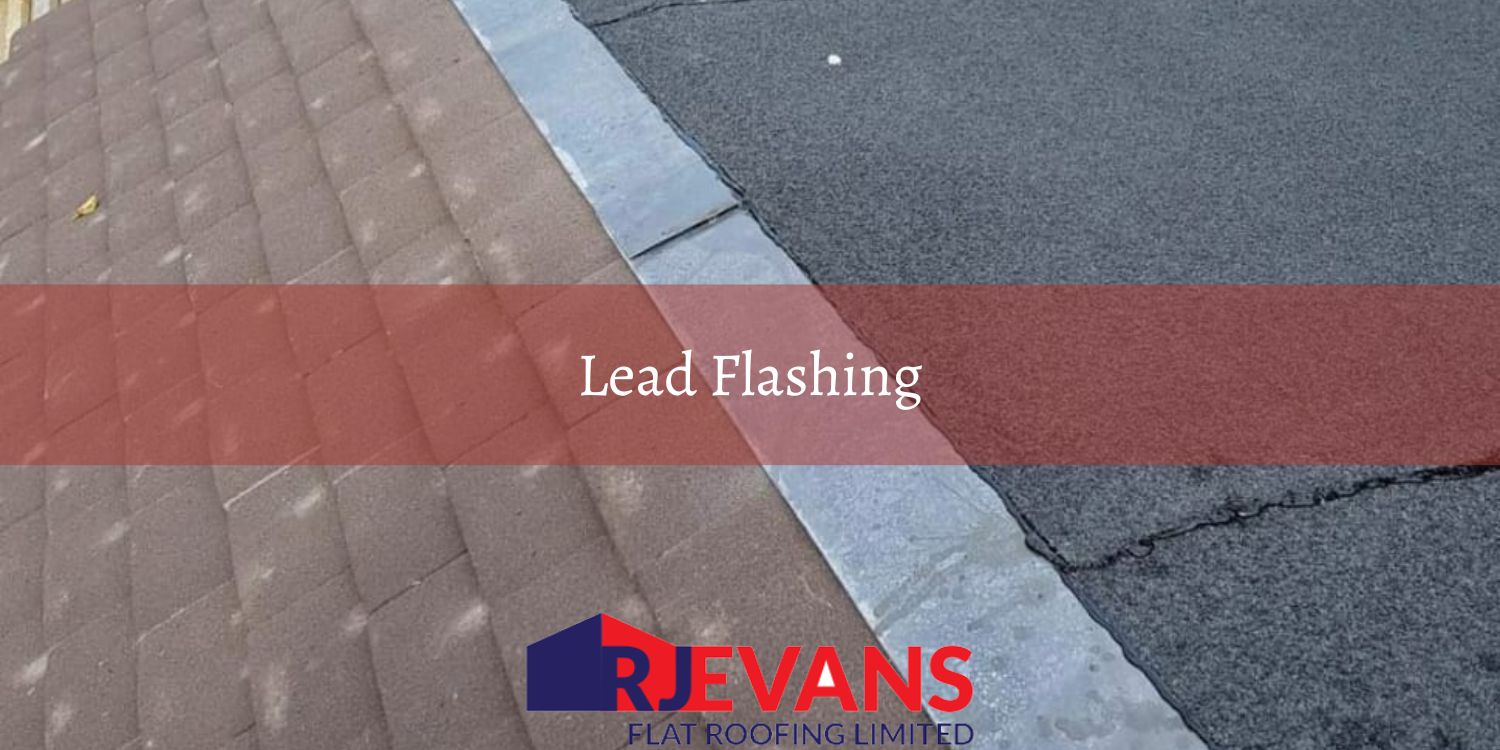
RJ Evans Flat Roofing Limited provides lead flashing installation and repair for commercial and residential buildings to seal vulnerable roof junctions, prevent water ingress, and protect adjoining roof coverings, masonry, and structural components from moisture damage. Lead flashing is a weatherproof roofing detail formed from sheet lead and installed where roof surfaces meet walls, penetrations, or changes in roof construction. The shaped lead creates a watertight transition that directs rainwater away from joints and prevents moisture from entering gaps within the roofing system. Lead flashing is commonly installed around chimney bases, roof-to-wall abutments, parapets, dormer windows, valleys, vent pipes, roof penetrations, and adjoining roof sections. Depending on the junction, the weatherproofing detail may include cover flashings, step flashings, apron flashings, back gutters, soakers, or lead-lined channels.
During installation, the lead is measured, cut, shaped, dressed, and secured around the surrounding roof materials. Correct sheet sizes, laps, joints, fixings, clips, and water-shedding details allow for thermal movement while maintaining the continuity of the weatherproof barrier. Lead is suitable for roof flashing because it is durable, malleable, corrosion-resistant, and capable of forming closely around complex junctions and penetrations. RJ Evans Flat Roofing Limited installs and repairs lead flashing to stop leaks, protect surrounding roofing materials, and keep commercial and residential roof connections watertight throughout their service life.
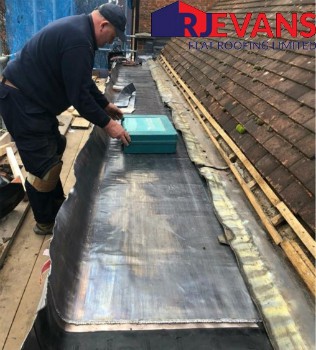
Lead flashing is a waterproofing material used to protect roof joints where different surfaces meet, such as at the junction between the roof and a chimney, skylight, or wall. It is primarily used to prevent water from penetrating these vulnerable areas, ensuring the roof remains watertight. Made from lead due to its strength, flexibility, and resistance to corrosion, lead flashing is particularly effective at withstanding harsh weather conditions, making it a durable solution for many roofing applications.
Lead flashing is typically applied in strips, which are carefully fitted and shaped around roof features to create a tight, secure seal. It can expand and contract with changes in temperature, reducing the risk of cracks or gaps forming. Lead is also environmentally friendly, as it is recyclable, and its long lifespan, which can extend up to 100 years in some cases, reduces the need for frequent replacement. This type of flashing is crucial for maintaining the overall health of a roof by preventing water ingress that could lead to structural damage or expensive repairs. According to roofing industry standards, properly installed lead flashing significantly extends the life of a roof by safeguarding its most vulnerable points from water damage.
Flat roof flashing serves the same purpose as flashing used on pitched roofs but is specifically designed to address the unique challenges of flat roofing. Flat roofs are more susceptible to water pooling, which increases the risk of leaks around vulnerable areas such as edges, parapets, and where the roof meets chimneys or skylights. Flashing for flat roofs is usually made from resilient, waterproof materials like lead, aluminium, or EPDM rubber, which are effective in withstanding standing water and preventing seepage into the building.
Since flat roofs have minimal slope, flashing must be installed carefully to ensure water is directed away from critical points prone to leaks. Unlike sloped roofs, where water naturally flows downward, flat roofs rely heavily on the flashing and drainage systems to prevent water buildup. The National Federation of Roofing Contractors (NFRC) emphasises the importance of high-quality flashing and proper placement for flat roofs. Regular inspection and upkeep of flat roof flashing are essential to maintain its functionality. According to the Roofing Alliance, a well-maintained flat roof can last between 20 and 30 years, depending on the materials used and environmental factors.
• Time Tested.
• Lead can be Welded to.
• Lead is Malleable.
• Attractive Finish.
• Experienced team of fully accredited Lead Flashing Specialists. We have operatives with more than 40 years’ experience.
• We provide a range of FREE quotations and solutions for all projects.
• Insurance backed guarantees.
• Excellent Customer Support throughout project.
• Rated 5 out of 5 from our previous customers.
If you would like a quotation or any information on Lead Flashing please get in touch with us or call us now on 01277 375 511.
.