
I agree Our site saves small pieces of text information (cookies) on your device in order to deliver better content and for statistical purposes. You can disable the usage of cookies by changing the settings of your browser. By browsing our website without changing the browser settings you grant us permission to store that information on your device.
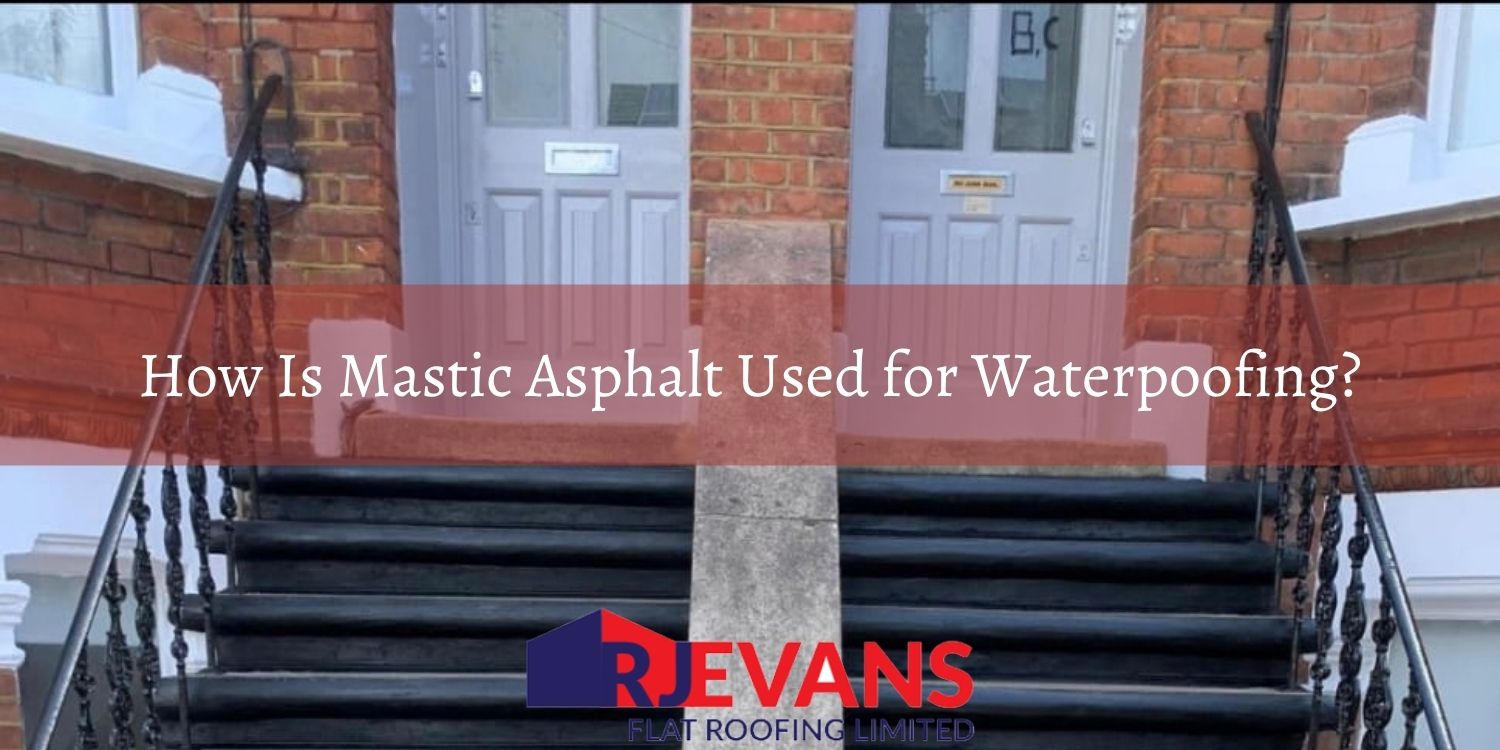
Mastic asphalt is used for waterproofing as a continuous protective layer that prevents unwanted water from passing through suitable building surfaces and construction. It can be used in technically appropriate applications including roofing, balconies, car parks, walkways, floors, steps, substations, and other areas where durable water protection is required. Its role is not limited to one building element or one type of structure. Mastic asphalt provides the waterproofing layer, while the reliability of the completed system depends on how that layer is supported, detailed, terminated, drained where necessary, and integrated with the surrounding construction.
Mastic asphalt → is used as → a waterproofing solution for technically suitable construction.
RJ Evans assesses mastic asphalt as part of the complete waterproofing assembly rather than as an isolated material applied to a surface. The substrate, supporting construction, geometry, drainage where relevant, falls, joints, penetrations, terminations, thresholds, interfaces, movement conditions, existing materials, and intended use can all affect whether the system is appropriate and how it should be incorporated.
Construction type + substrate condition + exposure + interfaces + required performance → determine → whether mastic asphalt is technically appropriate.
The central technical requirement is waterproofing continuity. The mastic asphalt must protect the principal surface while also remaining continuous through the locations where water could otherwise bypass the system, including edges, outlets, upstands, penetrations, thresholds, changes in level, terminations, joints, and transitions to adjoining construction. A large principal surface can remain waterproof while water enters through a failed interface or adjoining element. Waterproofing performance must therefore be assessed across the complete protected assembly rather than by judging the main field area alone.
Reliable waterproofing → requires → continuity across the protected surface and every credible water-entry interface.
The way mastic asphalt is used also depends on the application. Roofing requires integration with falls, drainage, outlets, upstands, and roof interfaces. Balconies and walkways require consideration of edges, thresholds, surface use, levels, and adjoining construction. Car parks, floors, steps, and other waterproofed areas introduce different substrate, detailing, exposure, and service conditions. Mastic asphalt should therefore be matched to the technical requirements of the individual asset rather than applied as an identical solution across every environment.
Application requirements → determine → how the mastic asphalt waterproofing system is designed, supported, and detailed.
Substrate condition is fundamental because the waterproofing must operate over construction capable of supporting the intended system. Cracking, instability, moisture, contamination, deterioration, damaged screeds, incompatible materials, or unsuitable retained layers can affect whether existing construction can remain or requires corrective work first.
Supporting-construction condition → influences → the reliability of the completed mastic asphalt waterproofing system.
Where water must be actively managed across a surface, drainage also forms part of the waterproofing strategy. Falls, outlets, channels, low points, edges, and changes in level can determine where water accumulates and how it leaves the protected construction. The waterproofing layer and water-management arrangement should therefore function together rather than being treated as unrelated parts of the project.
Waterproofing continuity + appropriate water management → support → dependable resistance to water ingress.
On existing construction, the correct use of mastic asphalt depends on what has failed, how far deterioration extends, and what remains technically serviceable. Existing waterproofing, screeds, substrates, decks, previous repairs, concealed moisture, interfaces, and adjoining materials can all influence whether the project requires local repair, refurbishment, overlay, partial replacement, or wider reconstruction. The visible location of water ingress does not necessarily define the original entry point or the full extent of affected construction. Investigation may therefore be required to establish the water-entry route, failure mechanism, deterioration extent, and suitability of materials proposed for retention.
Condition evidence + failure diagnosis + retained serviceability → influence → the appropriate mastic asphalt waterproofing strategy.
Where a defect remains localised and surrounding construction is serviceable, mastic asphalt can form part of a targeted repair. Where deterioration is broader but technically recoverable, refurbishment can preserve sound construction while renewing the parts of the waterproofing assembly that require intervention. Where the existing construction no longer provides a dependable basis for continued service, partial or complete replacement may become appropriate. The relationship between mastic asphalt and waterproofing is therefore functional rather than simply material-based. Mastic asphalt provides the waterproof barrier, but long-term performance depends on the complete construction within which that barrier operates.
Mastic asphalt waterproofing → depends on → suitable substrates, continuous protection, reliable detailing, compatible interfaces, and appropriate control of water.
RJ Evans combines specialist mastic asphalt expertise with wider waterproofing and roofing knowledge to determine where the material is appropriate, how it should integrate with surrounding construction, what existing components can remain in service, and what corrective or supporting work is required to provide dependable long-term protection against water ingress.
Mastic asphalt can be used for waterproofing across a range of technically suitable building and infrastructure applications where continuous protection against water ingress is required. These applications can include roofs, balconies, car parks, walkways, floors, steps, substations, and other construction where the substrate, interfaces, exposure conditions, and required performance support its use. The waterproofing principle remains consistent across these environments, but the technical requirements do not. Each application has different geometry, drainage conditions, interfaces, substrates, movement, exposure, and service requirements that determine how the mastic asphalt system should be constructed and detailed.
Mastic asphalt → can provide → continuous waterproofing across multiple technically suitable construction applications.
On suitable roofs, mastic asphalt can form the principal waterproofing layer across the roof surface while integrating with drainage points, upstands, penetrations, parapets, kerbs, rooflights, terminations, and adjoining construction. Reliable performance depends on the complete roof assembly, including the substrate or deck, falls, drainage, retained materials, interfaces, and the ability to maintain waterproofing continuity through every critical detail.
Mastic asphalt roof waterproofing → depends on → continuous field protection, suitable supporting construction, effective drainage, and reliable detailing.
Mastic asphalt can waterproof suitable balcony construction by providing continuous protection across the principal surface and through the thresholds, perimeters, drainage points, edges, wall junctions, and other interfaces surrounding it. Balcony waterproofing can be particularly dependent on available levels because the waterproofing must integrate with thresholds, adjoining internal spaces, surface falls, outlets, and perimeter construction without creating an uncontrolled water-entry route.
Balcony waterproofing → requires → continuity across the surface, thresholds, edges, drainage points, and adjoining interfaces.
Mastic asphalt can be incorporated into suitable car park waterproofing where the construction requires protection against water penetration and the system can accommodate the relevant substrate, drainage, joints, interfaces, ramps, levels, and service conditions. The waterproofing strategy must relate to the wider structure rather than treating the protected surface independently. Water movement, structural interfaces, changes in level, penetrations, and drainage routes can all influence the final detailing.
Car park waterproofing → depends on → suitable substrates, continuous protection, effective water management, and integration with the wider structure.
Mastic asphalt can waterproof suitable walkways where water must be prevented from entering the construction beneath or adjoining the trafficked surface. The waterproofing must remain continuous through edges, thresholds, wall interfaces, changes in level, drainage points, and transitions to adjoining areas. Where the walkway connects with balconies, roofs, steps, or other protected construction, the transition between those surfaces becomes part of the waterproofing strategy.
Walkway waterproofing → requires → continuous integration with edges, levels, drainage, thresholds, and adjoining construction.
Mastic asphalt can be used within suitable floor constructions where a continuous barrier against water penetration is required. Its effectiveness depends on the supporting substrate and on maintaining continuity around perimeters, joints, penetrations, thresholds, and transitions into adjoining waterproofed areas. The floor should therefore be considered as part of the surrounding construction rather than as an isolated horizontal surface.
Floor waterproofing → depends on → suitable substrates and continuous treatment of perimeters, joints, penetrations, and interfaces.
Steps create repeated transitions between horizontal and vertical construction. Mastic asphalt waterproofing must therefore remain continuous through treads, risers, edges, landings, junctions, and adjoining surfaces where those elements form part of the protected construction. RJ Evans considers the substrate, geometry, drainage, adjoining finishes, edges, and service conditions when determining whether mastic asphalt is technically appropriate.
Step waterproofing → requires → continuity through repeated changes in level and adjoining interfaces.
Mastic asphalt can be used within suitable substation construction where specific areas require protection against unwanted water penetration. The exact arrangement depends on the construction being protected and the project-specific substrate, penetrations, interfaces, thresholds, geometry, and performance requirements. RJ Evans assesses these conditions before determining how the waterproofing should be integrated with the wider construction.
Substation waterproofing → requires → project-specific assessment of construction, interfaces, penetrations, and required performance.
The same waterproofing material can encounter very different technical conditions depending on where it is used. A roof outlet, balcony threshold, car park joint, walkway edge, floor penetration, or stepped transition each creates a different relationship between water, geometry, substrate, movement, and adjoining construction. The waterproofing detail should therefore respond to the actual water-entry routes and physical conditions of the application rather than rely on one repeated detail across unrelated environments.
Application geometry + water exposure + interfaces + service conditions → determine → the required mastic asphalt waterproofing detail.
The substrate provides the supporting construction beneath the waterproofing and is therefore fundamental across every application. Its stability, moisture condition, surface integrity, preparation, compatibility, and existing deterioration can determine whether the proposed system has a reliable basis. Cracking, instability, damaged screeds, contamination, moisture, deterioration, or unsuitable retained layers may require correction before the mastic asphalt waterproofing is installed.
Substrate condition → determines → whether the supporting construction is suitable for the proposed waterproofing system.
Where water is exposed to the protected surface, the method of controlling and removing it forms part of the waterproofing strategy. Roofs, balconies, car parks, walkways, and other external surfaces can use different arrangements of falls, outlets, channels, gutters, edges, low points, and discharge routes. Mastic asphalt prevents water from entering the protected construction, while the drainage arrangement controls where water travels across the exposed surface and how it is removed.
Continuous waterproofing + appropriate water management → work together to control → water at exposed construction.
Water frequently enters construction at transitions rather than through the centre of a sound waterproofed area. Thresholds, terminations, penetrations, joints, perimeters, upstands, changes in level, and connections to other materials can therefore determine the performance of the entire waterproofing system. RJ Evans considers how the mastic asphalt should connect with each adjoining component so that the protected area remains continuous through the interface.
Reliable interface detailing → prevents → water bypassing otherwise continuous mastic asphalt waterproofing.
Different materials and parts of a structure can move because of temperature, structural behaviour, loading, or changes within supporting construction. The significance of this movement depends on the application and where it is concentrated. Joints, penetrations, thresholds, transitions, and interfaces should therefore be assessed in relation to the movement conditions expected within the particular construction.
Movement conditions → influence → the suitability and detailing of critical waterproofing interfaces.
Yes, where the existing construction is technically suitable or can be made suitable through appropriate corrective work. Existing waterproofing, substrates, screeds, decks, repairs, moisture, interfaces, and adjoining materials should be assessed before the final waterproofing strategy is defined. Depending on the evidence, mastic asphalt can form part of local repair, refurbishment, overlay, partial replacement, or wider reconstruction.
Existing construction condition + retained serviceability → determine → how mastic asphalt can be incorporated into the remedial waterproofing strategy.
No. Mastic asphalt can perform the same underlying function of resisting water penetration across multiple applications, but the construction required to achieve that function varies according to substrate, geometry, exposure, drainage, movement, interfaces, intended use, and retained materials. The system should therefore be designed and detailed around the conditions of the individual asset.
Common waterproofing function → does not require → identical construction or detailing across different applications.
Mastic asphalt should not be selected solely because waterproofing is required or because the material has been used successfully in another application. The construction must provide suitable substrates, interfaces, geometry, water-management conditions, compatibility, and performance requirements for the proposed system. Where these conditions cannot be provided reliably, or where another waterproofing approach better matches the technical requirements of the project, an alternative solution may be more appropriate.
Unsuitable construction or performance conditions → can make → mastic asphalt inappropriate for a particular waterproofing application.
RJ Evans assesses the construction that requires protection together with the substrate, geometry, likely water-entry routes, drainage, exposure, movement, penetrations, interfaces, existing waterproofing, moisture condition, adjoining materials, intended use, and required future performance. The purpose is to establish whether mastic asphalt can provide reliable continuous waterproofing within the actual conditions of the asset and how the system should be integrated with the surrounding construction.
Technical assessment → determines → whether and how mastic asphalt should be used for the individual waterproofing application.
Mastic asphalt is therefore a waterproofing solution that can be used across multiple technically appropriate environments rather than a system limited to one type of asset. RJ Evans uses specialist mastic asphalt knowledge together with wider waterproofing expertise to match the material, supporting construction, drainage, detailing, and interfaces to the specific requirements of each application.
Mastic asphalt provides dependable waterproofing when the protective layer remains continuous across the principal surface and through every location where water could otherwise bypass the system. These locations include perimeters, upstands, penetrations, thresholds, joints, terminations, changes in level, drainage points, and transitions to adjoining construction. The technical objective is therefore not simply to waterproof the largest visible area. The complete protected assembly must remain continuous wherever the waterproofing begins, ends, changes direction, meets another material, drains water, or is interrupted by another building element.
Mastic asphalt waterproofing → requires → continuous protection across principal surfaces, critical details, penetrations, terminations, drainage points, and adjoining interfaces.
Across the main protected area, mastic asphalt forms the continuous waterproofing barrier over suitable supporting construction. Its performance depends on the condition of the substrate, retained materials, geometry, interfaces, movement conditions, and water-management requirements of the application. The principal surface provides the main waterproofed field, but its reliability ultimately depends on how effectively that field connects with the surrounding details.
Principal mastic asphalt surface → provides → the continuous waterproofing field that connects all surrounding critical interfaces.
Interfaces are critical because they are locations where the protected surface meets another material, component, level, or form of construction. These transitions can interrupt waterproofing continuity and create potential routes for water to pass behind, beneath, or around an otherwise sound mastic asphalt surface. RJ Evans therefore considers each interface as part of the waterproofing system rather than treating it as a separate finishing detail.
Waterproofing interface → represents → a potential water-entry route where continuity must be maintained.
Perimeters occur where the protected surface meets walls, edges, kerbs, parapets, raised construction, or adjoining finishes. These locations often combine changes in geometry, materials, exposure, and water movement. RJ Evans considers substrate condition, available height, termination arrangement, adjoining materials, surrounding construction, and likely water routes when defining the perimeter detail.
Perimeter detailing → prevents → water bypassing the waterproofing at the boundary of the protected area.
Upstands extend the waterproofing from a horizontal or sloping surface onto adjoining vertical construction. They can be required around walls, kerbs, raised elements, plant bases, thresholds, rooflights, and other changes in level. The effectiveness of the upstand depends on its geometry, substrate, available height, termination, adjoining materials, and the ability to maintain reliable continuity with the principal waterproofing area.
Mastic asphalt upstands → extend → waterproofing continuity from horizontal surfaces into adjoining vertical construction.
Pipes, ducts, services, supports, fixings, and other penetrations interrupt the principal waterproofing surface. The waterproofing must therefore transition around the penetrating element without creating an uncontrolled route for water entry. RJ Evans considers the penetration geometry, support, movement, substrate condition, adjoining materials, and available detailing space before defining the appropriate treatment.
Penetration detailing → restores → waterproofing continuity where the protected surface is interrupted.
Thresholds can be complex because waterproofing, drainage, external levels, internal levels, access requirements, finishes, and adjoining construction meet within a restricted area. The detail must control water at the transition while maintaining continuity between the protected surface and the threshold construction.
Threshold geometry + water management + interface detailing → determine → the reliability of the waterproofing transition.
Steps, ramps, kerbs, recesses, raised sections, and other changes in level require the waterproofing to remain continuous as the protected surface moves between horizontal, vertical, or inclined planes. These changes introduce corners, edges, and junctions that must be incorporated into the waterproofing strategy rather than treated as breaks in the system.
Changes in level → require → continuous waterproofing across horizontal, vertical, and transitional surfaces.
Joints can occur where different sections of construction meet or where movement is expected. Their treatment depends on the structural arrangement, substrate, materials, expected movement, and the role of the joint within the protected assembly. RJ Evans considers whether the joint requires a specific waterproofing treatment and how the surrounding mastic asphalt should relate to the expected movement condition.
Joint type + movement requirement → influence → the appropriate waterproofing detail.
Building components can move because of thermal change, structural behaviour, loading, settlement, or interaction between different materials. Where that movement is concentrated at joints, thresholds, penetrations, perimeters, or transitions, it can place additional stress on the waterproofing. Recurring cracking or deterioration at the same location may therefore indicate an underlying movement condition rather than a simple surface defect.
Movement condition → influences → the design and long-term reliability of critical waterproofing interfaces.
Mastic asphalt can interface with concrete, masonry, metals, screeds, drainage components, existing waterproofing, sealants, and other building materials. These transitions must remain compatible and maintain the integrity of the waterproofing barrier. RJ Evans considers substrate preparation, retained-material condition, compatibility, separation where required, termination arrangement, and interface geometry before defining the connection.
Compatible material transition → supports → continuous waterproofing between mastic asphalt and adjoining construction.
A termination is the point at which the mastic asphalt waterproofing ends or transitions into another component. If that boundary is not resolved reliably, water may pass behind, beneath, or around the edge of the protected area. RJ Evans considers what the waterproofing terminates against, how the edge is protected, how adjoining materials behave, and whether another route could allow water to bypass the termination.
Reliable termination detailing → prevents → water bypassing the edge of the waterproofing system.
Where the protected area is exposed to surface water, drainage influences where water travels and where exposure is concentrated. Falls, outlets, gutters, channels, low points, edges, and discharge routes therefore need to operate with the waterproofing rather than independently from it. Mastic asphalt prevents water from entering the protected construction, while the drainage arrangement controls how water is directed across and away from the surface.
Continuous waterproofing + appropriate drainage → work together to control → surface water and water-entry risk.
Outlets and drainage points are critical because they occur where water is deliberately concentrated and directed through or away from the protected surface. The waterproofing must remain continuous at the exact location where water exposure can be greatest. RJ Evans considers the outlet or drainage component, surrounding geometry, local falls, substrate condition, connection detail, and adjoining waterproofing when assessing the interface.
Drainage-point detailing → connects → the waterproofing barrier with the water-discharge system.
Yes. Water can enter through a failed penetration, threshold, joint, perimeter, termination, drainage connection, adjoining element, or previous repair while the principal mastic asphalt area remains serviceable. Water can also travel through or between layers before appearing elsewhere, so the location of visible moisture does not necessarily identify the original point of entry.
Visible water ingress → does not necessarily identify → the entry point, failure mechanism, or extent of waterproofing deterioration.
RJ Evans considers the visible condition together with likely entry routes, moisture pathways, substrate condition, drainage, movement, adjoining materials, previous repairs, and the wider condition of the waterproofing system. Where surface inspection does not provide sufficient evidence, moisture assessment, core sampling, thermal imaging, electronic leak detection where technically appropriate, or targeted opening-up can be used or arranged to investigate concealed conditions.
Interface investigation → establishes → water-entry route, failure mechanism, affected construction, and corrective requirement.
Local repair can be appropriate where the failed interface is clearly defined, its underlying cause can be corrected, and the surrounding mastic asphalt and supporting construction remain technically serviceable. The corrective work should restore the integrity of the complete interface rather than merely cover the visible point at which water has appeared.
Defined interface failure + correctable cause + serviceable surrounding construction → can support → targeted mastic asphalt repair.
Repeated failure across multiple thresholds, joints, penetrations, drainage points, perimeters, or terminations can indicate that deterioration extends beyond one isolated location. The pattern can reflect movement, ageing, unsuitable substrates, incompatible materials, recurring detailing weaknesses, or declining serviceability of the wider waterproofing system. Where repeated local repairs no longer restore stable performance, broader investigation or refurbishment may become the more appropriate response.
Repeated interface failure across multiple locations → can indicate → wider waterproofing deterioration requiring broader intervention.
The objective is to make the protected construction operate as one continuous waterproofed assembly. Principal surfaces, perimeters, upstands, penetrations, thresholds, joints, terminations, drainage points, and adjoining materials must connect so that no unresolved transition provides a credible route for unwanted water entry.
Continuous mastic asphalt + reliable interfaces + appropriate water management + suitable supporting construction → provide → dependable waterproofing performance.
RJ Evans therefore treats details and interfaces as integral parts of mastic asphalt waterproofing rather than secondary work around the principal protected surface. Reliable performance depends on maintaining continuity wherever the system changes direction, meets another material, accommodates movement, drains water, terminates, or is interrupted by another part of the construction.